-
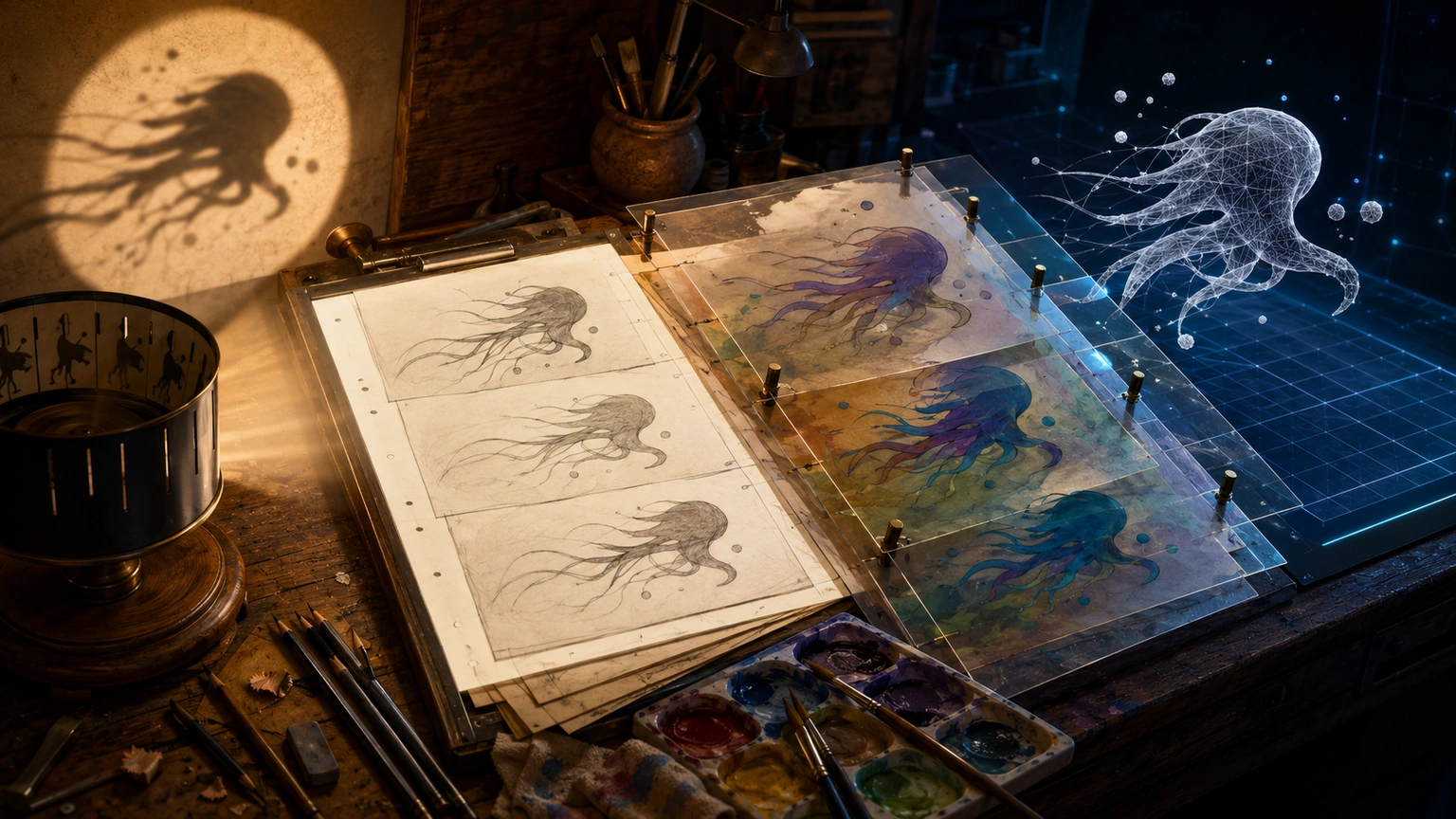
1Nineteenth-century devices like the zoetrope created the illusion of movement by doing what?
- AProjecting sound onto a screen
- BShowing a rapid sequence of slightly different still imagesCorrect
- CUsing electricity to move puppets
- DPrinting photographs in color
Why: Optical toys such as the zoetrope, phenakistoscope, and praxinoscope created the illusion of motion by presenting a fast sequence of slightly different still images, which the eye blends into movement. These pre-cinema devices demonstrated the core principle behind all animation and film. They set the stage for later projected motion pictures and drawn animation.
-
2Which 1928 Disney short is famous as one of the first cartoons with fully synchronized sound and helped launch Mickey Mouse to stardom?
- ASteamboat WillieCorrect
- BSnow White and the Seven Dwarfs
- CFantasia
- DGertie the Dinosaur
Why: 'Steamboat Willie' (1928), produced by Walt Disney and Ub Iwerks, was one of the first cartoons with fully synchronized sound and was a breakthrough hit that helped make Mickey Mouse a star. Synchronizing music and effects to the animation was a novelty that thrilled audiences. Earlier animation existed — like Winsor McCay's 'Gertie the Dinosaur' (1914) — but Steamboat Willie's sound made it a landmark.
-
3What was the first feature-length cel-animated film, released in 1937?
- APinocchio
- BSnow White and the Seven DwarfsCorrect
- CBambi
- DFantasia
Why: Walt Disney's 'Snow White and the Seven Dwarfs' (1937) was the first feature-length cel-animated film, proving that a full-length animated story could hold a mass audience and carry real emotion. Skeptics had dubbed the ambitious project 'Disney's Folly,' but it was a massive success. It opened the door to the golden age of animated features that followed.
-
4Which technique animates physical models or objects one frame at a time, as seen in classic King Kong effects and films by Aardman?
- ARotoscoping
- BStop motionCorrect
- CCel shading
- DMotion capture
Why: Stop motion animates physical objects — puppets, clay models, or props — by photographing them one frame at a time and moving them slightly between shots. It powered the 1933 'King Kong' effects and later Aardman films like 'Wallace & Gromit.' Distinct from drawn or computer animation, stop motion remains a beloved, tactile craft.
-
5Which studio's 'Looney Tunes' and 'Merrie Melodies' gave the world characters such as Bugs Bunny and Daffy Duck?
- AWarner Bros.Correct
- BPixar
- CStudio Ghibli
- DDreamWorks
Why: Warner Bros. produced the 'Looney Tunes' and 'Merrie Melodies' shorts, home to Bugs Bunny, Daffy Duck, Porky Pig, and others. Directors like Chuck Jones and Tex Avery made them famous for fast, anarchic comedy that contrasted with Disney's more sentimental style. These shorts are cornerstones of the golden age of American theatrical cartoons.
-
6The Japanese animation style known as anime was profoundly shaped by which post-war artist, often called the 'god of manga'?
- AHayao Miyazaki
- BOsamu TezukaCorrect
- CAkira Toriyama
- DKatsuhiro Otomo
Why: Osamu Tezuka, creator of 'Astro Boy,' is often called the 'god of manga' and was hugely influential on both Japanese comics and television animation. His 'Astro Boy' TV series (1963) helped establish the visual style and production methods of modern anime. Later masters like Hayao Miyazaki built on the foundation Tezuka helped create.
-
7Which co-founder of Studio Ghibli is celebrated for hand-drawn films such as 'My Neighbor Totoro' and 'Spirited Away'?
- AHideaki Anno
- BHayao MiyazakiCorrect
- CMakoto Shinkai
- DIsao Takahata
Why: Hayao Miyazaki co-founded Studio Ghibli and directed beloved hand-drawn films including 'My Neighbor Totoro' (1988) and 'Spirited Away' (2001), the latter winning the Academy Award for Best Animated Feature. His work brought Japanese animation worldwide critical acclaim and showed the artistic heights of traditional hand-drawn techniques. Isao Takahata was his fellow Ghibli co-founder and a major director in his own right.
-
8Which 1995 film was the first entirely computer-animated feature, made by Pixar?
- AShrek
- BToy StoryCorrect
- CIce Age
- DFinding Nemo
Why: Pixar's 'Toy Story' (1995) was the first feature film animated entirely with computer-generated imagery, a landmark that proved CGI could carry a full-length story. Its success launched the modern era of computer-animated features and helped make Pixar a powerhouse. Later CGI hits like 'Shrek,' 'Ice Age,' and 'Finding Nemo' followed in its wake.
-
9The technique of tracing over live-action footage frame by frame to produce lifelike animated movement is called what?
- ARotoscopingCorrect
- BSquash and stretch
- COnion skinning
- DTweening
Why: Rotoscoping, patented by Max Fleischer in 1915, involves tracing over live-action film frame by frame to capture realistic motion. It was used in early cartoons and later in films and music videos for a distinctive look. It differs from stop motion and pure hand-drawn animation, and modern digital tools have revived it in new forms.
-
10The Academy Award for Best Animated Feature, honoring feature-length animation, was first awarded in which decade?
- AThe 1940s
- BThe 1970s
- CThe 2000sCorrect
- DThe 2020s
Why: The Academy Award for Best Animated Feature was introduced for the 2001 film year and first presented in 2002, with 'Shrek' winning the inaugural award. Its creation reflected how central animated features had become to the film industry. The category has since recognized works from Pixar, Disney, Studio Ghibli, and independent animators around the world.