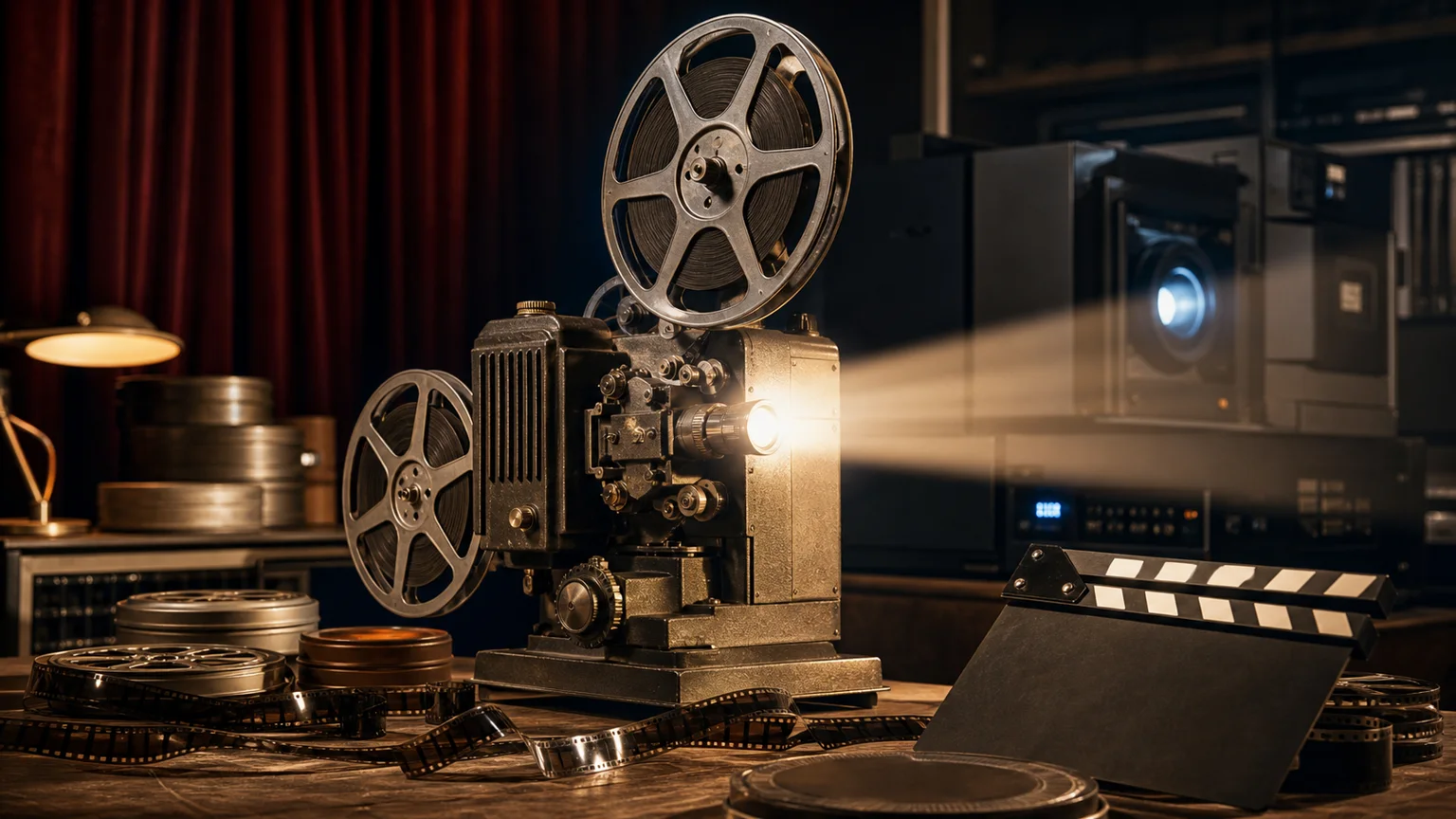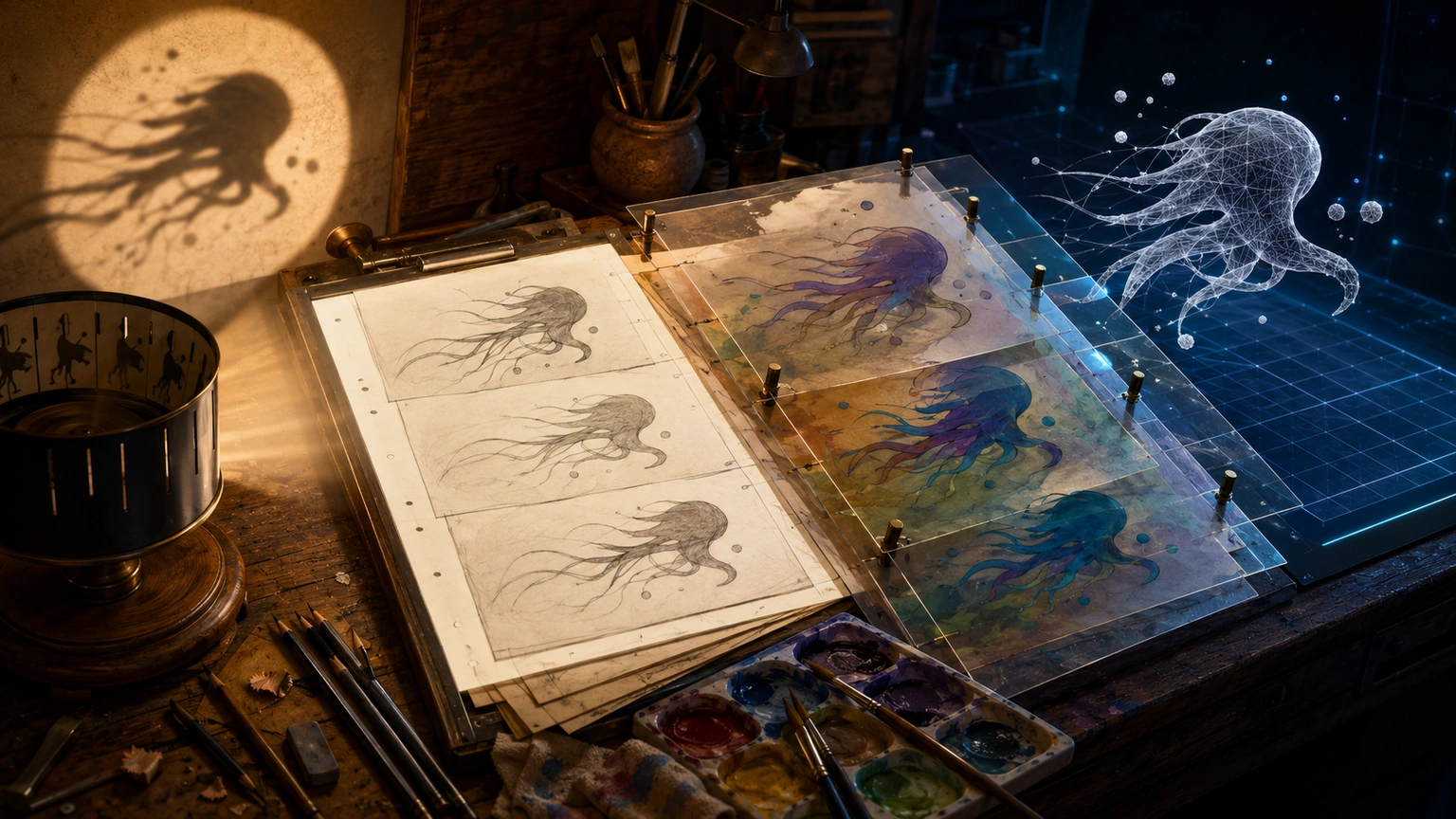
The history of animation is the story of a single trick used in ever more sophisticated ways: show the eye a rapid sequence of still images, and it perceives motion. From spinning drums of drawings in the 1800s to fully computer-generated worlds today, every era of animation is a new answer to the question of how to build convincing movement — and a new use for it. Animation has never been only for children; it has been a laboratory for art, technology, and storytelling across many cultures.
This guide is a beginner's timeline, not a complete history. Animation traditions grew up around the world at once, and many are simplified or left out here. The goal is the main branches and the reason each arrived.
Before film: optical toys
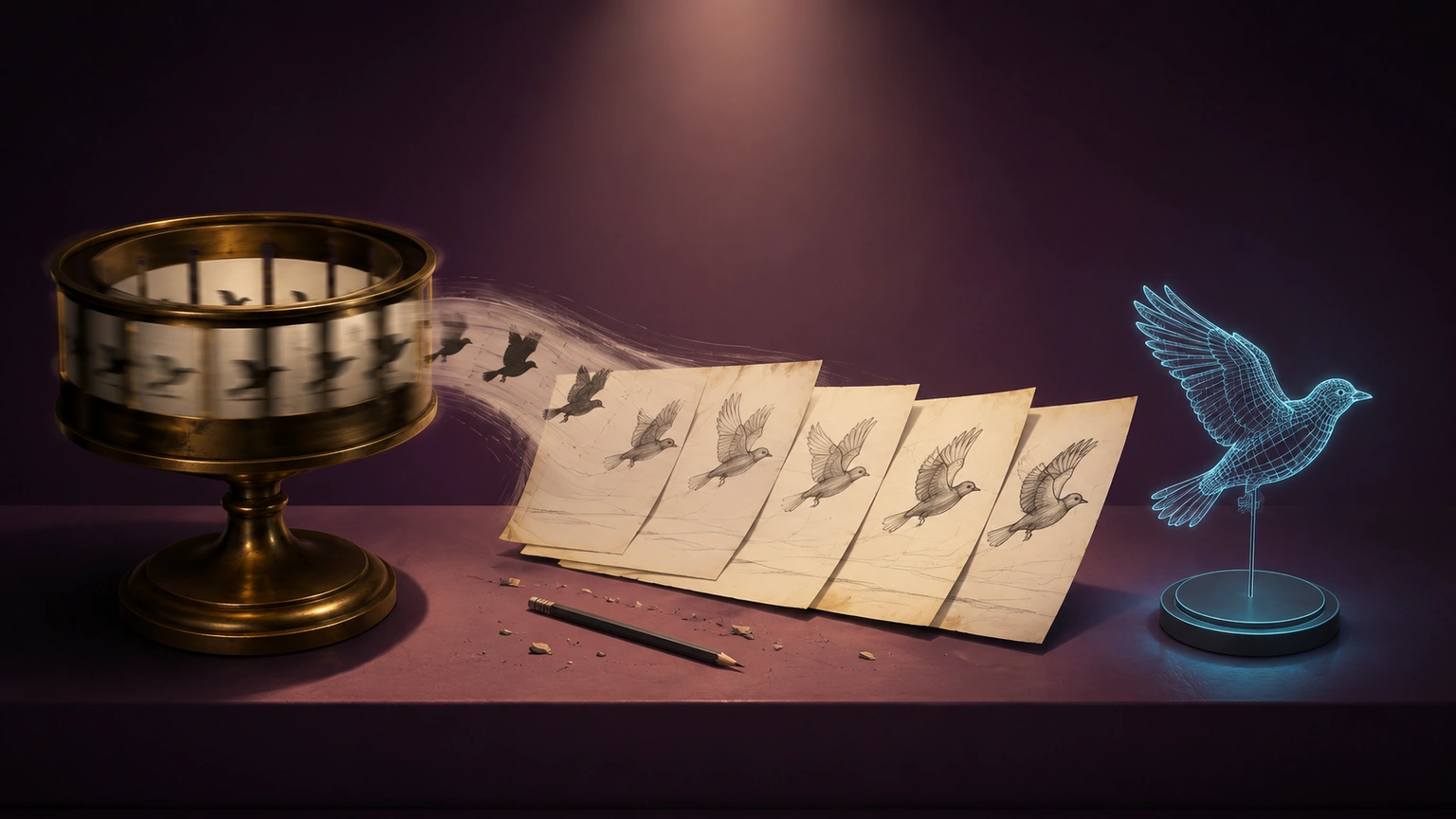
Animation is older than cinema. In the 19th century, optical toys such as the zoetrope and phenakistoscope created the illusion of movement by showing a fast sequence of slightly different drawings. These pre-cinema devices demonstrated the core principle behind all animation and film, and they set the stage for projected motion pictures. Early pioneers like Winsor McCay, whose 'Gertie the Dinosaur' (1914) gave a drawn character real personality, showed that animation could tell a story, not just move.
Sound and the rise of Disney
The first breakthrough of the sound era was Steamboat Willie (1928), a Disney short produced by Walt Disney and Ub Iwerks. As one of the first cartoons with fully synchronized sound, it thrilled audiences and helped launch Mickey Mouse to stardom. Synchronizing music and effects to the animation was a novelty that instantly raised expectations for the form.
Disney then took an enormous gamble. Snow White and the Seven Dwarfs (1937) became the first feature-length cel-animated film — characters painted on transparent sheets laid over painted backgrounds. Critics had mocked the ambitious project as 'Disney's Folly,' but it was a triumph that proved a full-length animated story could hold a mass audience and carry genuine emotion. The golden age of animated features had begun.
See how many milestones you can name with the Animation History Quiz — ten questions, each with a short explanation.
The golden age of the theatrical cartoon
Alongside features, the short cartoon flourished. Warner Bros. produced the 'Looney Tunes' and 'Merrie Melodies' series, home to Bugs Bunny, Daffy Duck, and Porky Pig. Directors like Chuck Jones and Tex Avery made them famous for fast, anarchic comedy that deliberately contrasted with Disney's more sentimental tone. These shorts, screened before feature films, are cornerstones of American animation.
Beyond drawing: stop motion and rotoscoping
Not all animation is drawn. Stop motion animates physical models one frame at a time, moving them slightly between shots; it powered the 1933 'King Kong' effects and later the clay worlds of Aardman's 'Wallace & Gromit.' Rotoscoping, patented by Max Fleischer in 1915, traces over live-action footage frame by frame to capture lifelike movement. These techniques expanded what animation could look like and feel like, long before computers.
Anime finds its voice
Japan developed one of the world's most influential animation traditions. Post-war artist Osamu Tezuka, creator of 'Astro Boy' and often called the 'god of manga,' shaped both Japanese comics and the visual style and production methods of television animation with his 1963 'Astro Boy' series. A later generation carried anime to global acclaim: Hayao Miyazaki co-founded Studio Ghibli and directed hand-drawn masterpieces such as 'My Neighbor Totoro' (1988) and 'Spirited Away' (2001), the latter winning the Academy Award for Best Animated Feature. Ghibli demonstrated the artistic heights that traditional hand-drawn animation could reach.
The CGI revolution
The biggest technical shift since sound arrived in 1995. Pixar's Toy Story was the first feature film animated entirely with computer-generated imagery (CGI), proving that fully digital characters and environments could carry a full-length story. Its success launched the modern era of computer-animated features and made Pixar a powerhouse, with hits like 'Shrek,' 'Ice Age,' and 'Finding Nemo' following close behind. CGI did not kill hand-drawn animation, but it became the dominant commercial style for animated features.
Animation grows up in prestige
As animated features became central to the film industry, they earned formal recognition. The Academy Award for Best Animated Feature was introduced for the 2001 film year and first presented in 2002, with 'Shrek' the inaugural winner. The category has since honored work from Pixar, Disney, Studio Ghibli, and independent animators worldwide — a sign of how firmly animation had established itself as a major art form, not a novelty.
How the pieces fit
The threads of animation history never fully replace one another; they accumulate. Optical toys established the principle, cel animation built an industry, stop motion and rotoscoping widened the toolkit, anime proved animation could be a serious global art, and CGI opened a new dimension. A modern animated film may combine drawn elements, 3D models, and digital effects — using techniques from every era at once.
Frequently asked questions
What was the first animated feature film? Walt Disney's 'Snow White and the Seven Dwarfs' (1937) was the first feature-length cel-animated film. Earlier animation existed in shorts, but Snow White proved a full-length animated story could succeed with a mass audience.
What is the difference between cel animation and CGI? Cel animation is hand-drawn: characters are painted on transparent sheets over painted backgrounds. CGI (computer-generated imagery) builds characters and scenes digitally in three dimensions. Pixar's 'Toy Story' (1995) was the first fully CGI feature.
What is anime? Anime is animation from Japan, shaped early on by artists like Osamu Tezuka and later carried to worldwide acclaim by studios such as Studio Ghibli. It spans many genres and audiences, not only children's programming.
How does stop motion work? Stop motion animates physical objects — puppets or clay models — by photographing them one frame at a time and moving them slightly between shots, so they appear to move on their own.
Keep exploring
Ready to test what you learned? Take the Animation History Quiz, then place it in context with the Film History Quiz and the Video Game History Quiz.
Sources and further reading
- Animation collection and film history The Museum of Modern Art (MoMA) · Accessed July 22, 2026
- National Film Registry: Descriptions and Essays Library of Congress · Accessed July 22, 2026