Lifestyle Lifestyle ● Easy

Nutrition Basics quiz

Nutrition is surrounded by myths, fads, and conflicting headlines — but a few well-established basics go a long way. This quiz covers everyday nutrition fundamentals: the main food groups, reading nutrition labels, hydration, and what fibre, protein, and balanced eating actually mean. This quiz is for general educational purposes only and is not medical or dietary advice; for personal guidance, consult a qualified professional.

Start the quiz
Questions
10
Time
11 min
Difficulty
● Easy
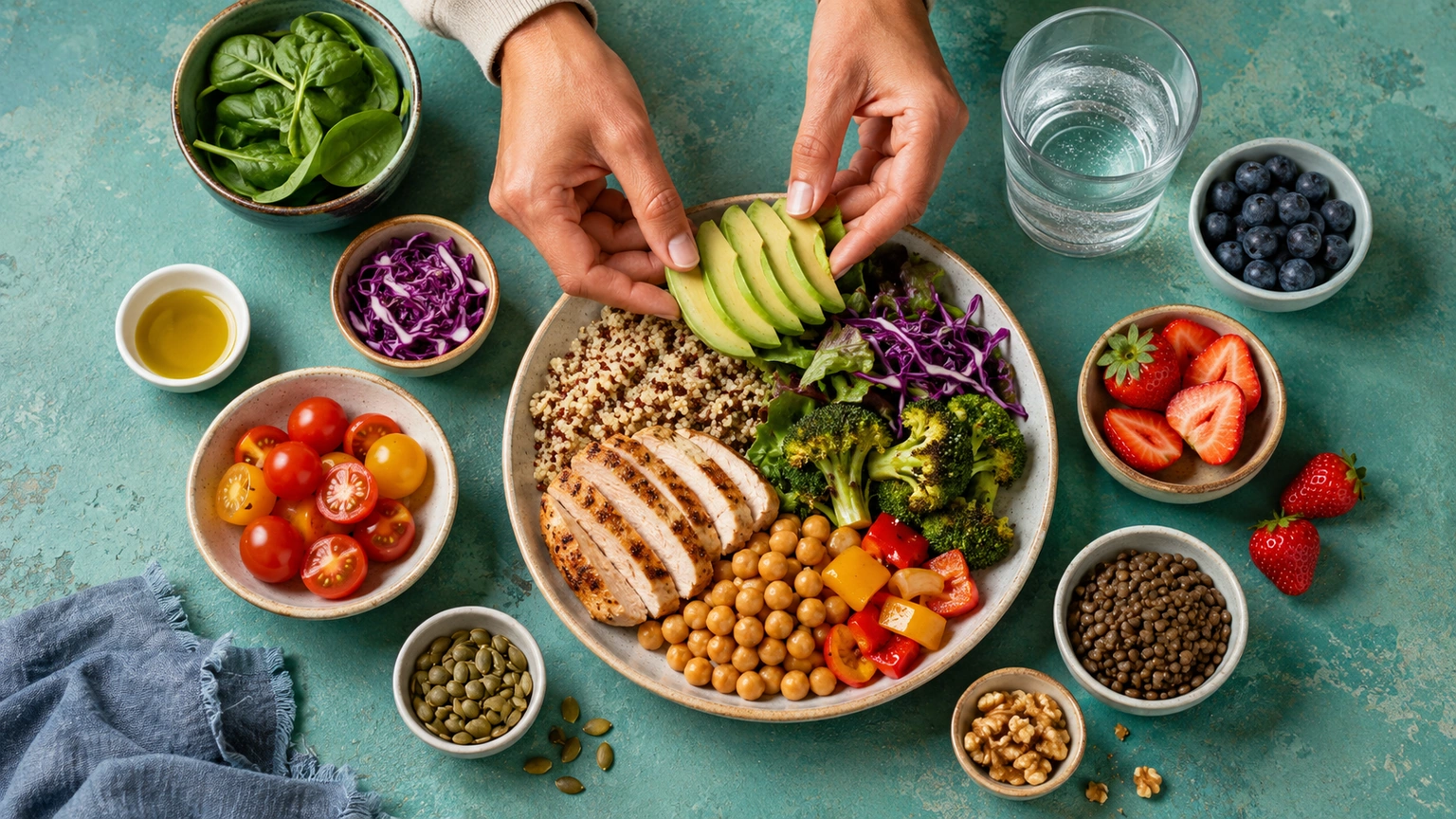
Hands adding avocado to a balanced meal surrounded by vegetables, grains, fruit, legumes, nuts, and water
Lifestyle · Easy
TestYourChoice original artwork
Quick info

Before you start

Best for

Anyone wanting a clearer grasp of everyday nutrition

Format

10 explanation-backed questions in about 11 minutes.

What you'll cover

A small map of the test

  1. 1Macronutrients, protein, and calories
  2. 2Fibre, whole vs refined grains, and hydration
  3. 3Reading serving sizes, added sugars, and ingredient lists
  4. 4What a balanced approach to eating emphasizes
Audience

Who this quiz is for

  • Anyone wanting a clearer grasp of everyday nutrition
  • Learners reviewing food labels and balanced eating
Key concepts

Ideas this quiz checks

Macronutrient

A nutrient the body needs in large amounts — carbohydrate, protein, or fat.

Dietary fibre

A plant carbohydrate the body cannot fully digest that supports digestion and fullness.

Added sugars

Sugars put into foods during processing, distinct from those occurring naturally.

Serving size

The reference amount on a label that all its nutrition numbers refer to.

Score guide

How to read your score

  1. 80–100% Strong command

    You understand most of the core ideas and can use the explanations to polish smaller gaps.

  2. 50–79% Solid base

    You know part of the topic, but the missed explanations are the highest-value review material.

  3. 0–49% Review first

    Treat this as a starting map: revisit the key concepts, then retake the quiz for a cleaner signal.

Learning path

Continue with a purpose

Recommended next step Practise reading an invented Nutrition Facts label Follow a five-minute walkthrough of serving size, portion arithmetic, percent Daily Value, nutrients, and ingredients.
After the quiz

Recommended next steps

  • Practise reading an invented Nutrition Facts label with the five-minute walkthrough
  • Take the Sleep Basics Quiz for another everyday-health topic
  • Try the Human Body Basics Quiz to see how food fuels the body
References

Sources and further reading

Important note

Educational disclaimer

This quiz is general nutrition education and is not medical, dietary, or nutritional advice for your individual needs.

How to play

Instructions

  1. You have 11 minutes total to answer 10 multiple-choice questions.
  2. Choose an answer to lock it in. The runner immediately shows the correct answer and explanation.
  3. Use Hint when you want a nudge, or Skip to move forward without answering.
  4. Keyboard shortcuts: A-D answer, H hints, S skips, Enter/ next, and previous.
  5. No signup required. Your progress is local to this quiz session.

Every question, explained

Answer key and explanations

All 10 questions from this quiz, with the correct answer and the reasoning behind it. Take the quiz first if you want an honest score — or read straight through and use this as revision material.

  1. What are the three main macronutrients the body needs in large amounts?

    • Vitamins, minerals, and water
    • Carbohydrates, proteins, and fatsCorrect
    • Sugar, salt, and fibre
    • Calcium, iron, and zinc

    Why: The three macronutrients — needed in relatively large amounts — are carbohydrates, proteins, and fats. Carbohydrates are the body's main energy source, proteins build and repair tissues, and fats support energy storage, cell structure, and the absorption of certain vitamins. Vitamins and minerals, needed in smaller amounts, are called micronutrients.

  2. What is dietary fibre, and why is it useful?

    • A type of protein that builds muscle
    • A type of carbohydrate the body cannot fully digest, which supports healthy digestionCorrect
    • A vitamin found only in meat
    • A kind of fat that stores energy

    Why: Dietary fibre is a type of carbohydrate that the body cannot fully break down. It adds bulk that supports healthy digestion and helps you feel full, and it is found in foods like vegetables, fruits, beans, and whole grains. Many people eat less fibre than general guidelines suggest.

  3. On a nutrition label, what does the 'serving size' tell you?

    • The healthiest amount to eat
    • The amount of food that the listed nutrition values refer toCorrect
    • The total amount in the package
    • The recommended daily limit

    Why: The serving size on a nutrition label is the reference amount that all the listed values (calories, fat, sugar, and so on) apply to. It is easy to misread a label if a package contains several servings — the numbers shown are per serving, so the actual amount you eat may be a multiple of those values.

  4. Which generally retains more fibre and nutrients: whole grains or refined grains?

    • Refined grains
    • Whole grainsCorrect
    • They are identical
    • Neither contains fibre

    Why: Whole grains (such as whole-wheat flour, brown rice, and oats) keep the bran and germ as well as the endosperm. Refining removes the bran and germ, which reduces fibre and removes some nutrients; some refined grains are later enriched with selected nutrients. General healthy-eating guidance recommends choosing whole grains more often.

  5. Which is a sensible general statement about hydration?

    • Everyone must drink exactly eight glasses of water daily
    • Water supports many body functions, and needs vary by person, activity, and climateCorrect
    • Only athletes need to think about hydration
    • Thirst is never a useful signal

    Why: Water is needed for normal body functions, and some fluid also comes from foods and other drinks. There is no single magic number that fits everyone: needs vary with factors such as age, activity, environment, pregnancy, breastfeeding, illness, and individual health. A clinician can give personal guidance when fluid needs are medically restricted or unusually high.

  6. What is a primary role of protein in the body?

    • To provide the body's main quick energy source
    • To build and repair tissues such as muscle, and to make enzymesCorrect
    • To store fat-soluble vitamins
    • To add sweetness to food

    Why: Protein provides the building blocks (amino acids) used to build and repair tissues — including muscle — and to make enzymes, hormones, and other essential molecules. Protein is found in foods such as beans, lentils, eggs, dairy, fish, meat, nuts, and soy. While it can supply energy, the body relies mainly on carbohydrates and fats for that.

  7. What is the difference between 'added sugars' and naturally occurring sugars?

    • There is no difference
    • Added sugars are put in during processing or preparation, while naturally occurring sugars are already present in foods like fruit and milkCorrect
    • Added sugars are healthier
    • Natural sugars contain no calories

    Why: Naturally occurring sugars are found in whole foods such as fruit (fructose) and milk (lactose), which also provide fibre, vitamins, or protein. Added sugars are those put into foods and drinks during processing or preparation. Many nutrition labels now list added sugars separately, and general guidance is to limit them.

  8. What does a generally balanced approach to eating tend to emphasize?

    • Relying on a single 'superfood'
    • Variety across food groups, plenty of vegetables and fruit, and moderationCorrect
    • Skipping meals to cut calories
    • Eating only one type of macronutrient

    Why: Most general healthy-eating guidance emphasizes variety, plenty of vegetables and fruit, whole grains, sources of protein, and moderation — rather than any single 'miracle' food or extreme restriction. No one food makes a diet healthy or unhealthy on its own; the overall pattern over time is what matters most.

  9. What does a 'calorie' measure?

    • The amount of fat in a food
    • A unit of energy that food provides to the bodyCorrect
    • The number of ingredients
    • The vitamin content

    Why: A calorie is a unit of energy. The calories listed on food labels indicate how much energy that food provides when the body uses it. Different macronutrients provide different amounts: carbohydrates and protein supply about 4 calories per gram, while fat supplies about 9 calories per gram.

  10. On a packaged food's ingredient list, in what order are ingredients listed?

    • Alphabetically
    • By weight, from the most to the leastCorrect
    • Randomly
    • By price

    Why: On U.S. packaged-food labels, ingredients are generally listed by weight from the ingredient used in the greatest amount to the one used in the least amount. This reveals relative amounts within that product, but it does not by itself tell you whether a food fits your individual dietary needs.