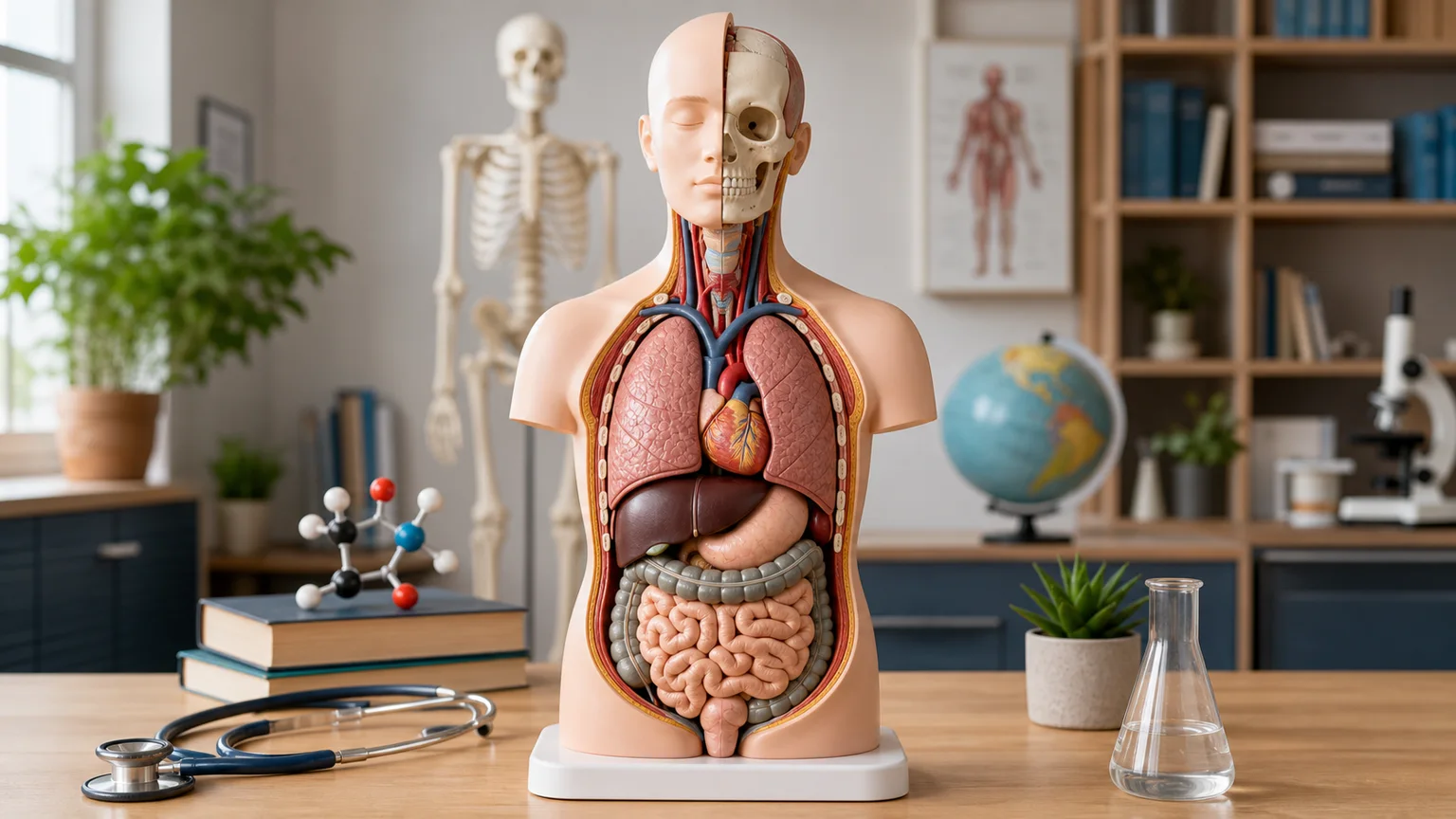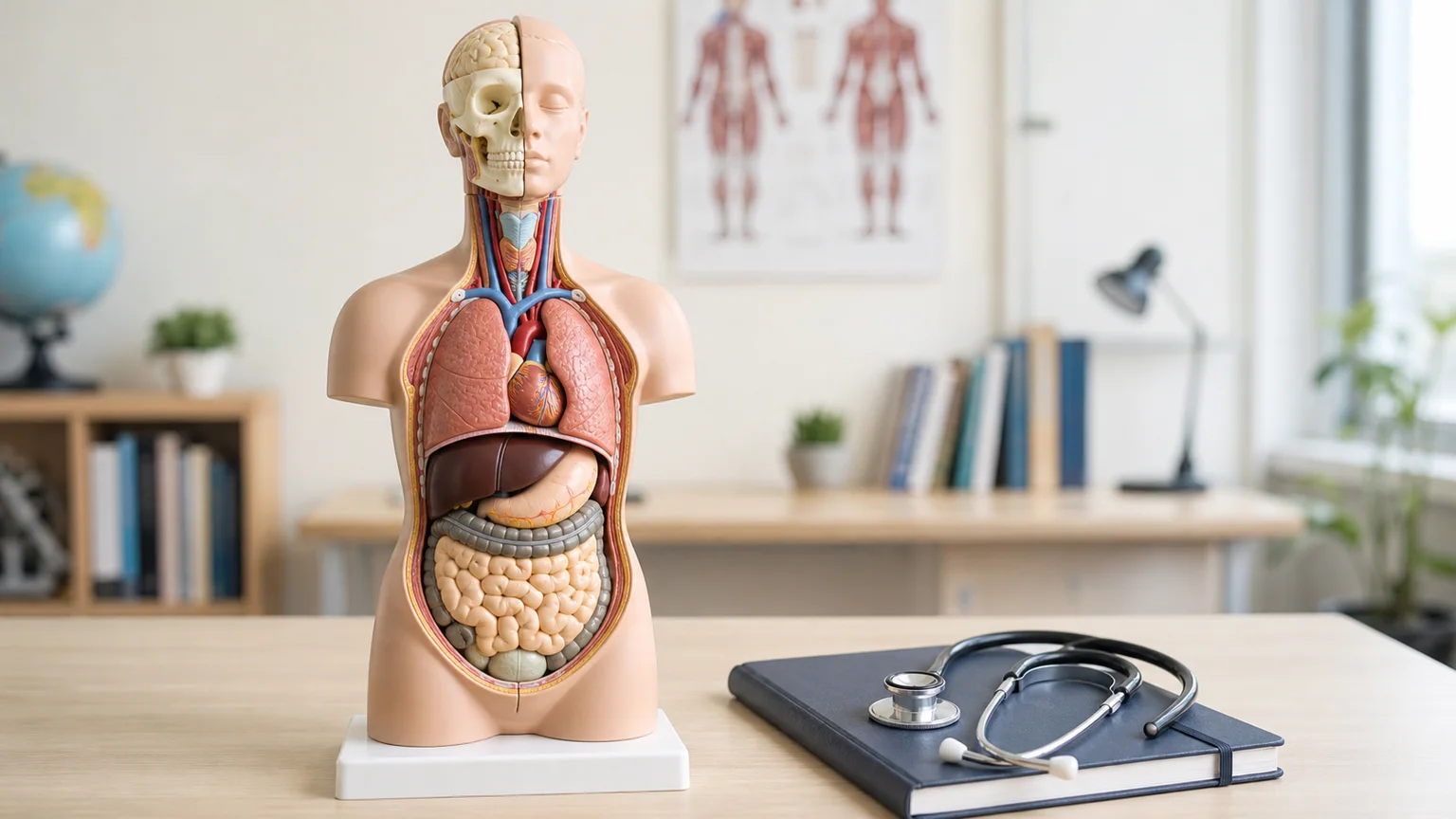
The human body is easier to learn when you treat it as a set of cooperating systems rather than a list of isolated organs. Cells form tissues, tissues build organs, and organs work together in organ systems. A system is therefore a group of organs that performs major functions or meets physiological needs.
Educational anatomy sources commonly describe 11 organ systems. The boundaries are useful for study, but the systems constantly share structures, signals, materials, and work.
1. Integumentary system: the boundary
The integumentary system includes the skin, hair, nails, and related glands. Skin forms a physical barrier between the body and the environment, helps limit water loss, participates in temperature control, provides sensation, and supports vitamin D production when exposed to sunlight.
It also works closely with immune defenses. A cut is not only a skin problem: blood clotting, inflammation, nerves, and tissue repair all respond.
2. Skeletal system: support and protection
Bones, cartilage, ligaments, and joints give the body structure. The skeleton protects organs — the skull surrounds the brain and the rib cage helps protect the heart and lungs — while joints provide places where movement can occur.
Bone is living tissue. It changes over time, stores minerals such as calcium and phosphorus, and contains marrow that produces blood cells.
3. Muscular system: movement and heat
Skeletal muscles pull on bones to move the body and help maintain posture. Smooth muscle moves materials through organs such as the digestive tract and helps regulate the diameter of blood vessels. Cardiac muscle forms the pumping wall of the heart.
Muscles use chemical energy and release heat, so muscular activity also contributes to body temperature. Movement depends on cooperation among muscle, bone, joints, nerves, blood flow, and respiration.
4. Nervous system: rapid communication
The nervous system includes the brain, spinal cord, nerves, and sensory structures. It receives information, processes it, and sends rapid electrical and chemical signals. This system helps you sense the environment, move intentionally, learn, remember, and coordinate many automatic functions.
A reflex shows the value of speed: sensory input can trigger a protective motor response through the spinal cord while information also travels to the brain.
5. Endocrine system: hormone signaling
The endocrine system uses hormones released into the bloodstream. Glands and hormone-producing tissues help regulate growth, metabolism, reproduction, stress responses, sleep-wake timing, blood glucose, and other long-term processes.
Nervous signals are often fast and targeted; endocrine signals can travel widely and act over longer periods. The two systems coordinate rather than working as rivals.
6. Cardiovascular system: transport
The cardiovascular system consists of the heart, blood, and blood vessels. The heart pumps blood through a network of arteries, capillaries, and veins. Blood transports oxygen, nutrients, hormones, heat, immune cells, and waste products.
Transport links nearly every other system. The lungs load oxygen into the blood, the digestive system supplies absorbed nutrients, endocrine glands release hormones into circulation, and the kidneys adjust the composition and volume of body fluids.
7. Lymphatic and immune system: fluid return and defense
Lymphatic vessels return excess fluid from tissues to the bloodstream. Lymph nodes, the spleen, thymus, and other lymphoid tissues support immune surveillance and responses to harmful organisms or abnormal cells.
The immune system is not confined to one organ. Skin, bone marrow, blood, the digestive tract, and many signaling molecules all contribute to defense.
8. Respiratory system: gas exchange
Air travels through the nose or mouth, throat, larynx, trachea, and branching airways to the lungs. In tiny air sacs called alveoli, oxygen moves into the blood while carbon dioxide moves out to be exhaled.
Breathing requires the diaphragm and other muscles, while the brainstem helps regulate the rhythm. The respiratory and cardiovascular systems operate as a team: lungs exchange gases and blood transports them.
9. Digestive system: breakdown and absorption
The digestive tract runs from the mouth through the esophagus, stomach, small intestine, large intestine, rectum, and anus. Accessory organs such as the liver, gallbladder, and pancreas add substances that help digestion.
Food is mechanically and chemically broken down. Most nutrient absorption occurs in the small intestine; the large intestine absorbs water and supports a large community of microorganisms. Absorbed nutrients then enter blood or lymph for transport.
10. Urinary system: filtration and balance
The kidneys filter blood and produce urine, which travels through the ureters to the bladder and leaves through the urethra. The system removes selected wastes and helps regulate water, electrolytes, acid-base balance, and blood pressure.
A kidney is not simply a strainer. It selectively returns useful substances to the blood and adjusts what is excreted according to the body's needs.
11. Reproductive system: producing offspring
The reproductive system produces sex cells and hormones and includes structures involved in fertilization, pregnancy, birth, or delivery of sperm. Its anatomy and functions differ among individuals. Unlike systems required for an individual's immediate survival, its central biological role concerns reproduction.
Reproductive tissues also interact with endocrine, cardiovascular, nervous, and other systems throughout development and adulthood.
How the systems maintain homeostasis
Homeostasis means keeping internal conditions within workable ranges despite change. It does not mean every measurement stays fixed. Body temperature, blood glucose, water balance, oxygen, carbon dioxide, and acidity are continually sensed and adjusted.
Consider a short run:
- Nervous signals activate skeletal muscles.
- Muscles use more oxygen and nutrients and produce more carbon dioxide and heat.
- Breathing becomes faster and deeper.
- Heart rate and blood flow increase.
- Skin blood vessels and sweat glands help release heat.
- Hormones help adjust fuel use and fluid balance.
No single system can explain the response. The useful mental model is a network of feedback loops.
A better way to study the body
For each system, learn four things: its main job, major organs, what it sends or receives, and two systems it depends on. Then trace an everyday event — eating a meal, standing up, healing a cut, or exercising — across several systems. Connections make the names easier to remember and closer to how the body actually works.
Try the Human Body Basics Quiz to check the map.
Health disclaimer: This article is general anatomy education, not medical advice or a diagnostic guide. Seek qualified care for symptoms or questions about your health.
Sources and further reading
- Medical Language Related to the Whole Body NCBI Bookshelf, National Library of Medicine · Accessed July 18, 2026
- Anatomy and Physiology 2e: An Introduction to the Human Body OpenStax · Accessed July 18, 2026