General Knowledge & Science General Knowledge & Science ● Easy

Geography Basics quiz

This 10-question geography basics quiz covers continents, oceans, capital cities, mountains, deserts, latitude, and country size. Each answer explains the definition or convention being tested, including where terms such as continent and desert need qualification.

Start the quiz
Questions
10
Time
11 min
Difficulty
● Easy
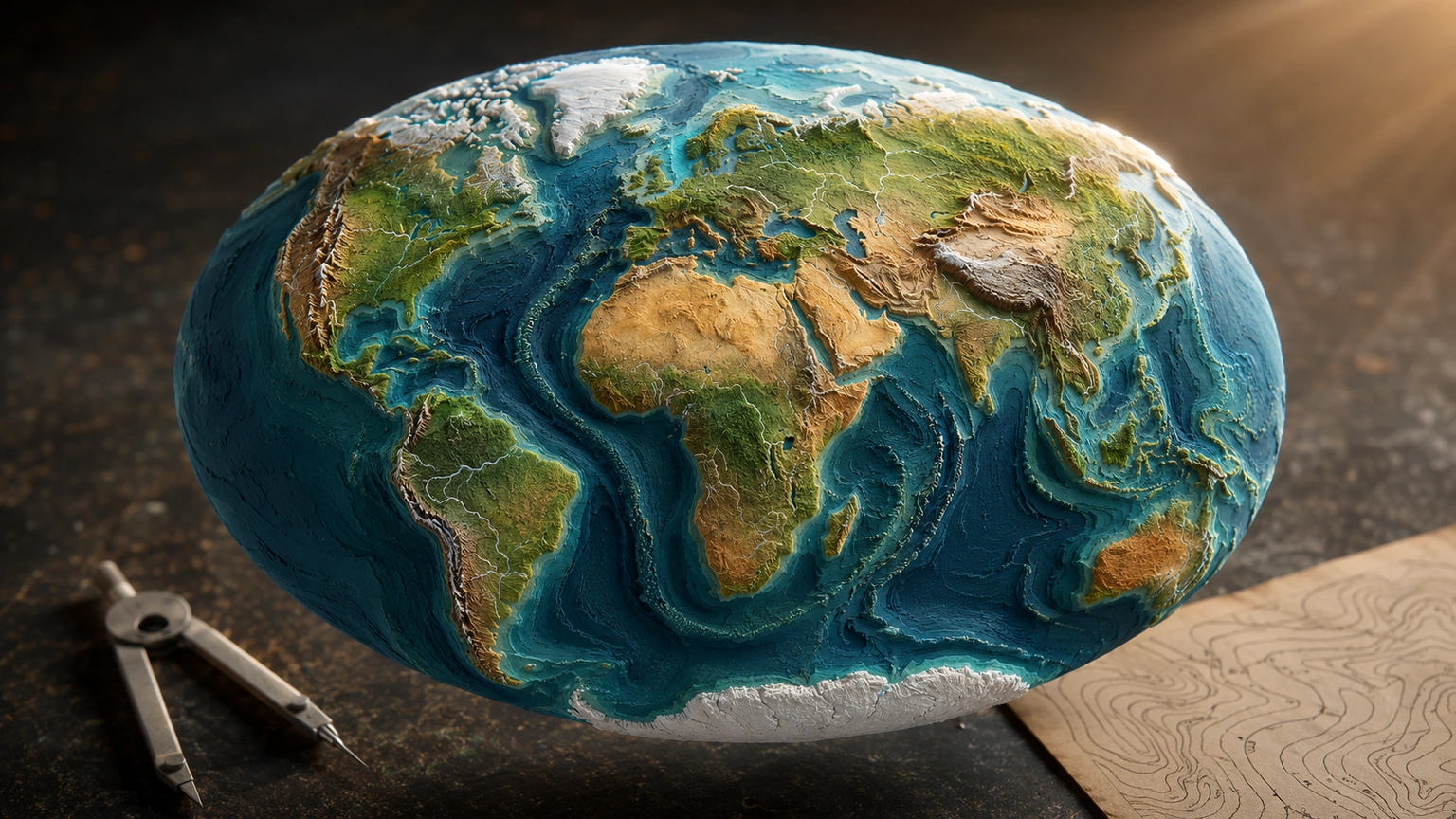
A tactile relief globe showing continents, oceans, mountain ranges, deserts, and river systems
General Knowledge & Science · Easy
TestYourChoice original artwork

About this quiz

Geography questions depend on definitions as well as place names. The Sahara is the largest hot desert, while Antarctica is the largest desert when low precipitation is the defining feature. Everest is the highest point above sea level, while a base-to-summit comparison produces a different mountain question. Country counts and continent labels can also vary with recognition and classification conventions.

This quiz states the convention in the question or explanation when it affects the answer. It covers country area, oceans, capitals, hot deserts, mountains, latitude, and the commonly taught seven-continent model.

Use a missed answer to identify whether the gap was a location, definition, unit, or naming convention. The aim is not a collection of trick claims; it is a compact map of facts that can be checked against current geographic and government sources.

Quick info

Before you start

Best for

Curious learners of all ages

Format

10 explanation-backed questions in about 11 minutes.

What you'll cover

A small map of the test

  1. 1Largest countries, oceans, and deserts
  2. 2Capital cities and continents
  3. 3Mountains, ranges, and the equator
  4. 4Memorable geographic firsts and extremes
Audience

Who this quiz is for

  • Curious learners of all ages
  • Anyone brushing up on world geography basics
Key concepts

Ideas this quiz checks

Equator

The imaginary line at 0 degrees latitude circling the Earth midway between the poles.

Continent

One of Earth's large continuous landmasses, such as Asia or Africa.

Capital city

The city that serves as a country's seat of government.

Land area

The total surface a country covers, used to rank country size.

Score guide

How to read your score

  1. 80–100% Strong command

    You understand most of the core ideas and can use the explanations to polish smaller gaps.

  2. 50–79% Solid base

    You know part of the topic, but the missed explanations are the highest-value review material.

  3. 0–49% Review first

    Treat this as a starting map: revisit the key concepts, then retake the quiz for a cleaner signal.

After the quiz

Recommended next steps

  • Take the Human Body Basics Quiz for another quick knowledge check
  • Try the Space and Astronomy Basics Quiz to zoom out from Earth
  • Explore the General Knowledge & Science category for more to learn
References

Sources and further reading

How to play

Instructions

  1. You have 11 minutes total to answer 10 multiple-choice questions.
  2. Choose an answer to lock it in. The runner immediately shows the correct answer and explanation.
  3. Use Hint when you want a nudge, or Skip to move forward without answering.
  4. Keyboard shortcuts: A-D answer, H hints, S skips, Enter/ next, and previous.
  5. No signup required. Your progress is local to this quiz session.

Every question, explained

Answer key and explanations

All 10 questions from this quiz, with the correct answer and the reasoning behind it. Take the quiz first if you want an honest score — or read straight through and use this as revision material.

  1. Which is the largest country in the world by land area?

    • Canada
    • RussiaCorrect
    • China
    • United States

    Why: Russia is by far the largest country in the world by land area, covering about 17 million square kilometres — roughly 11% of the world's total land. It spans two continents (Europe and Asia) and 11 time zones. Canada is the second largest, followed by the United States and China, which are similar in size.

  2. Which is the largest ocean on Earth?

    • Atlantic Ocean
    • Indian Ocean
    • Pacific OceanCorrect
    • Arctic Ocean

    Why: The Pacific Ocean is the largest and deepest ocean on Earth, covering about a third of the planet's surface — larger than all of Earth's land area combined. It stretches from the Arctic in the north to the Southern Ocean, and contains the Mariana Trench, the deepest known point in any ocean.

  3. Which continent contains the most countries?

    • Asia
    • Europe
    • AfricaCorrect
    • South America

    Why: Using the common seven-continent model and the 54 African UN member states, Africa has more countries than the other continents. Counts can differ when a source handles disputed recognition, dependencies, or continent boundaries differently, so the convention and source should accompany the number.

  4. What is the capital city of Australia?

    • Sydney
    • Melbourne
    • CanberraCorrect
    • Perth

    Why: Canberra is Australia's national capital. Section 125 of the Australian Constitution required the seat of government to be in New South Wales but at least 100 miles from Sydney; the federal capital territory and Canberra were subsequently established. Population size does not determine which city is a country's capital.

  5. What is the largest hot desert in the world?

    • Gobi Desert
    • Sahara DesertCorrect
    • Arabian Desert
    • Kalahari Desert

    Why: The Sahara, in North Africa, is the largest hot desert in the world at roughly 9 million square kilometres — about the size of the United States. (Antarctica is technically the largest desert overall, because a desert is defined by low precipitation rather than heat, but the Sahara is the largest hot desert.)

  6. What is the tallest mountain on Earth above sea level?

    • K2
    • Mount Kilimanjaro
    • Mount EverestCorrect
    • Denali

    Why: Mount Everest, in the Himalayas on the border of Nepal and Tibet (China), is the tallest mountain above sea level at about 8,849 metres. Measured from base to peak the Hawaiian volcano Mauna Kea is taller, but Everest holds the record for the highest point above sea level.

  7. What is the name of the imaginary line at 0 degrees latitude that circles the Earth?

    • The Prime Meridian
    • The EquatorCorrect
    • The Tropic of Cancer
    • The International Date Line

    Why: The Equator is the imaginary line at 0 degrees latitude that circles the Earth midway between the North and South Poles, dividing it into the Northern and Southern Hemispheres. The Prime Meridian, by contrast, is the line at 0 degrees longitude, running north–south through Greenwich, England.

  8. In the commonly taught seven-continent model, which name refers to both a country and a continent?

    • Greenland
    • AustraliaCorrect
    • Antarctica
    • India

    Why: In the common seven-continent model, Australia is both a sovereign country and the name of a continent. Oceania is a broader regional label that includes Australia and many Pacific islands, and continent models vary between education systems. The qualification matters more than treating one naming convention as universal.

  9. What is the capital city of Canada?

    • Toronto
    • Vancouver
    • OttawaCorrect
    • Montreal

    Why: Ottawa is Canada's capital, while Toronto is the country's largest city by population under current census measures. A capital is the seat of national government, not necessarily the largest city. Historical explanations for Ottawa's selection involve political, linguistic, geographic, and security considerations rather than a single simple rule.

  10. Which is the longest continental mountain range in the world?

    • The Rocky Mountains
    • The Himalayas
    • The AndesCorrect
    • The Alps

    Why: The Andes, running down the western edge of South America for about 7,000 kilometres through seven countries, form the longest continental mountain range in the world. The Himalayas contain the highest peaks, but the Andes are longer. (The longest mountain range overall is the mid-ocean ridge, which lies mostly underwater.)