General Knowledge & Science General Knowledge & Science ● Easy

Human Body Basics quiz

How well do you know the human body? This quiz covers the major organs and body systems — from the heart and lungs to the brain, liver, and skeleton — in clear, everyday language. It is designed to teach the basics of human biology with an explanation for every answer. This quiz is for general educational purposes only and is not medical advice.

Start the quiz
Questions
10
Time
12 min
Difficulty
● Easy
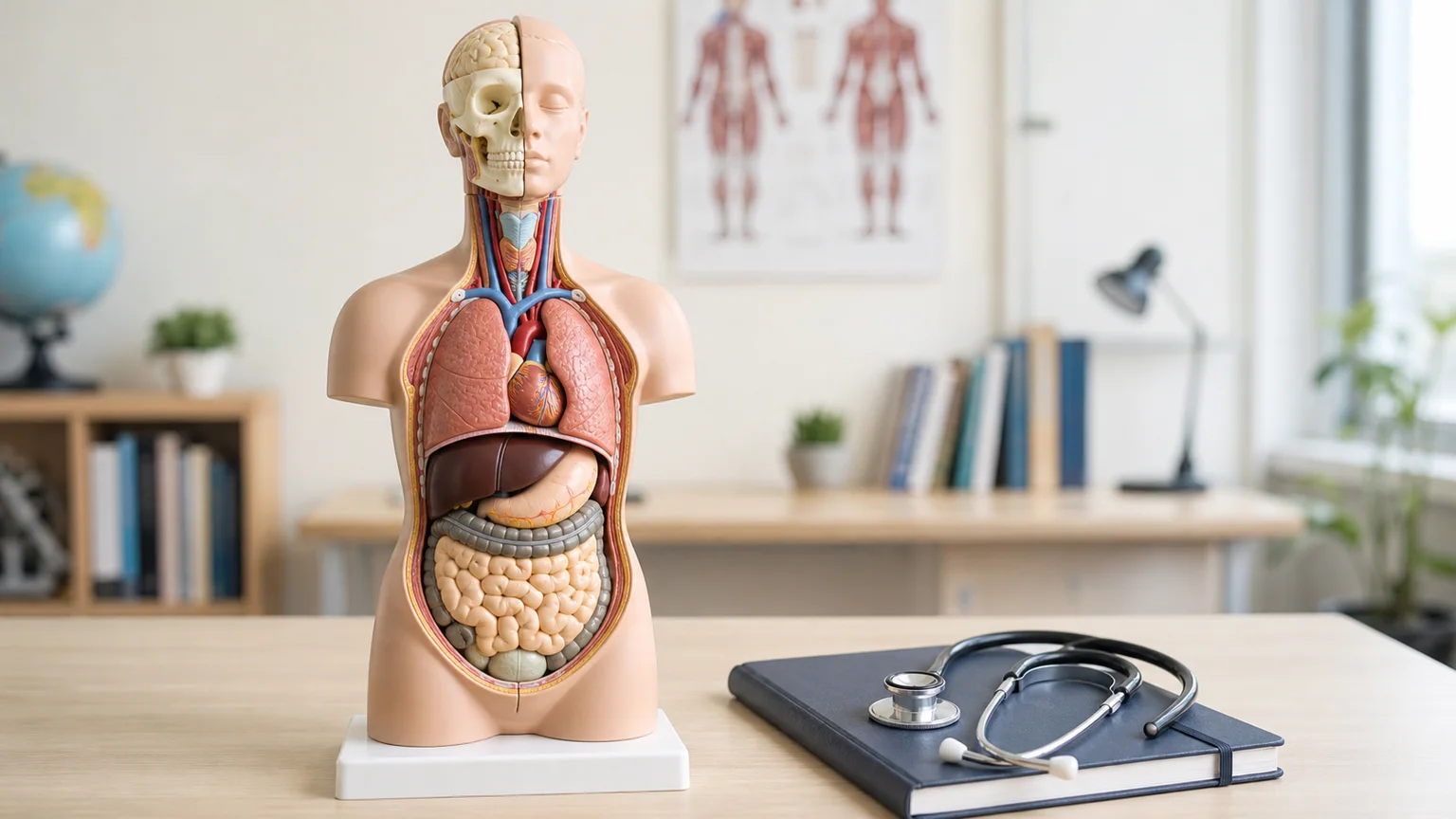
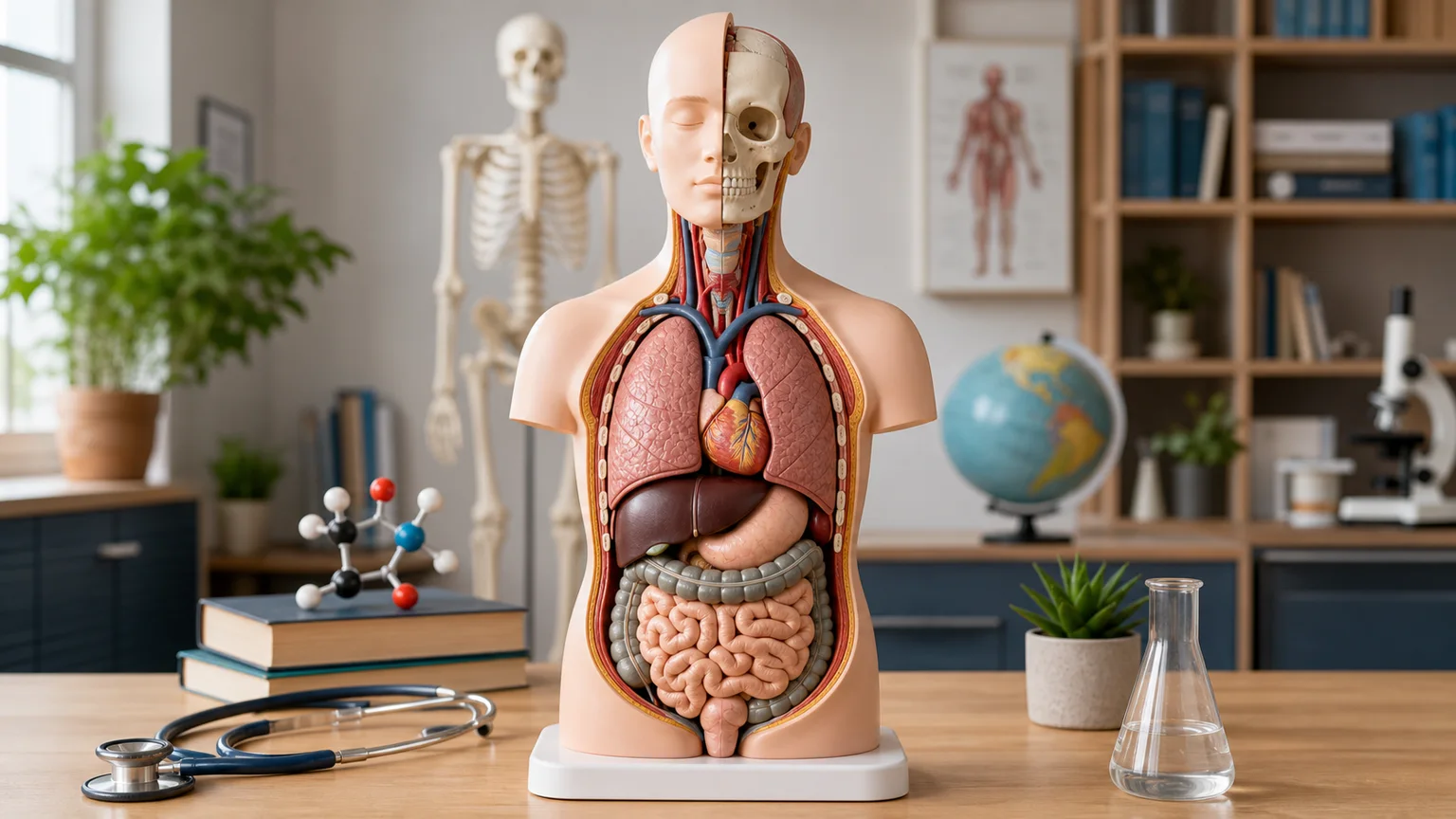
An anatomical teaching model displaying the skeleton and major internal organs in a science classroom
General Knowledge & Science · Easy
TestYourChoice original artwork
Quick info

Before you start

Best for

Curious learners of all ages

Format

10 explanation-backed questions in about 12 minutes.

What you'll cover

A small map of the test

  1. 1Major organs: skin, heart, lungs, liver, kidneys
  2. 2Body systems, including the nervous system
  3. 3Bones and the role of the diaphragm
  4. 4How blood, breathing, and digestion work
Audience

Who this quiz is for

  • Curious learners of all ages
  • Students reviewing the basics of human anatomy
Key concepts

Ideas this quiz checks

Organ

A group of tissues that work together to perform a specific function, like the heart.

Body system

A set of organs that cooperate on a broad task, such as the nervous system.

Diaphragm

A large, dome-shaped muscle below the lungs that drives breathing.

Red blood cell

A blood cell that carries oxygen from the lungs to the rest of the body.

Score guide

How to read your score

  1. 80–100% Strong command

    You understand most of the core ideas and can use the explanations to polish smaller gaps.

  2. 50–79% Solid base

    You know part of the topic, but the missed explanations are the highest-value review material.

  3. 0–49% Review first

    Treat this as a starting map: revisit the key concepts, then retake the quiz for a cleaner signal.

After the quiz

Recommended next steps

  • Read Human Body Systems Explained for a connected tour of how it all works
  • Take the Space and Astronomy Basics Quiz for another science topic
  • Try the Geography Basics Quiz for a broader knowledge check
References

Sources and further reading

Important note

Educational disclaimer

This quiz is general educational content about human anatomy and is not medical advice.

How to play

Instructions

  1. You have 12 minutes total to answer 10 multiple-choice questions.
  2. Choose an answer to lock it in. The runner immediately shows the correct answer and explanation.
  3. Use Hint when you want a nudge, or Skip to move forward without answering.
  4. Keyboard shortcuts: A-D answer, H hints, S skips, Enter/ next, and previous.
  5. No signup required. Your progress is local to this quiz session.
Every question, explained

Answer key and explanations

All 10 questions from this quiz, with the correct answer and the reasoning behind it. Take the quiz first if you want an honest score — or read straight through and use this as revision material.

  1. What is the largest organ of the human body?

    • The liver
    • The skinCorrect
    • The lungs
    • The brain

    Why: The skin is the body's largest organ and covers its external surface. It forms a protective barrier, helps regulate temperature and fluid loss, and contributes to sensory perception. Its thickness and total area vary among people and across parts of the body.

  2. Which organ is responsible for pumping blood around the body?

    • The lungs
    • The liver
    • The heartCorrect
    • The kidneys

    Why: The heart is a muscular organ that pumps blood through the circulatory system. Blood carries oxygen and nutrients to tissues and transports carbon dioxide and other waste products away. The heart, blood, and blood vessels work together as the cardiovascular system.

  3. Which organs are mainly responsible for breathing and gas exchange?

    • The kidneys
    • The lungsCorrect
    • The stomach
    • The liver

    Why: The lungs are the main organs of the respiratory system. When you breathe in, they take in oxygen and pass it into the blood; when you breathe out, they remove carbon dioxide, a waste gas. This exchange happens in tiny air sacs called alveoli, of which the lungs contain millions.

  4. Approximately how many bones are in the adult human body?

    • 106
    • 206Correct
    • 306
    • 406

    Why: A typical adult skeleton has about 206 named bones, though the count can vary because some people have additional or fused bones. The skeleton supports the body, protects organs, stores minerals, and works with muscles to enable movement.

  5. Which organs filter waste products from the blood and produce urine?

    • The lungs
    • The kidneysCorrect
    • The liver
    • The spleen

    Why: The kidneys filter the blood, removing wastes and extra water to make urine. They also help balance water, salts, and minerals and make hormones involved in blood-pressure control, red-blood-cell production, and bone health.

  6. Which is the largest internal organ in the human body?

    • The heart
    • The liverCorrect
    • The stomach
    • The brain

    Why: The liver is the largest internal organ. Among its many roles, it processes nutrients, produces bile to help digest fats, makes important blood proteins, stores energy, and helps remove harmful substances from the blood.

  7. The brain and spinal cord are the main parts of which body system?

    • The digestive system
    • The nervous systemCorrect
    • The respiratory system
    • The endocrine system

    Why: The brain and spinal cord form the central nervous system. Together with nerves throughout the body, this system receives sensory information, processes it, and helps coordinate movement, thought, and many automatic body functions.

  8. Where does most nutrient absorption from food take place?

    • The stomach
    • The small intestineCorrect
    • The large intestine
    • The esophagus

    Why: Most nutrients are absorbed through the wall of the small intestine and pass into the bloodstream; fats and some vitamins enter the lymphatic system first. The stomach begins important digestive work, while the large intestine mainly absorbs water and helps form stool.

  9. What do red blood cells mainly transport around the body?

    • OxygenCorrect
    • Hormones
    • Fat
    • Vitamins

    Why: Red blood cells contain haemoglobin, a protein that carries oxygen from the lungs to tissues throughout the body. They also help carry some carbon dioxide back toward the lungs. White blood cells have different roles in immune defence.

  10. Which large, dome-shaped muscle below the lungs helps you breathe?

    • The diaphragmCorrect
    • The bicep
    • The heart
    • The hamstring

    Why: The diaphragm is a large, dome-shaped muscle that sits below the lungs. When it contracts and flattens, it expands the chest cavity and draws air into the lungs; when it relaxes, air is pushed out. Although breathing is automatic, you can also control the diaphragm consciously, for example when holding your breath.