General Knowledge & Science General Knowledge & Science ● Easy

World History Basics quiz

How well do you know the story of human civilisation? This world history quiz covers ancient empires, world-changing inventions, revolutions, explorers, and the major events that shaped the modern world. Each question comes with a clear explanation, so you build genuine, lasting knowledge — perfect for students, trivia lovers, and curious minds of any age.

Start the quiz
Questions
10
Time
11 min
Difficulty
● Easy
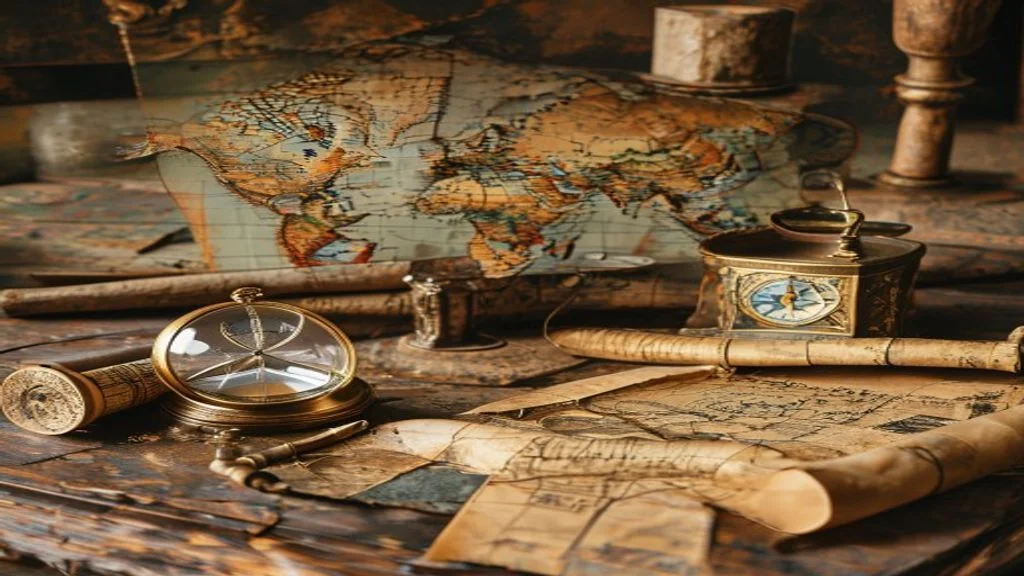
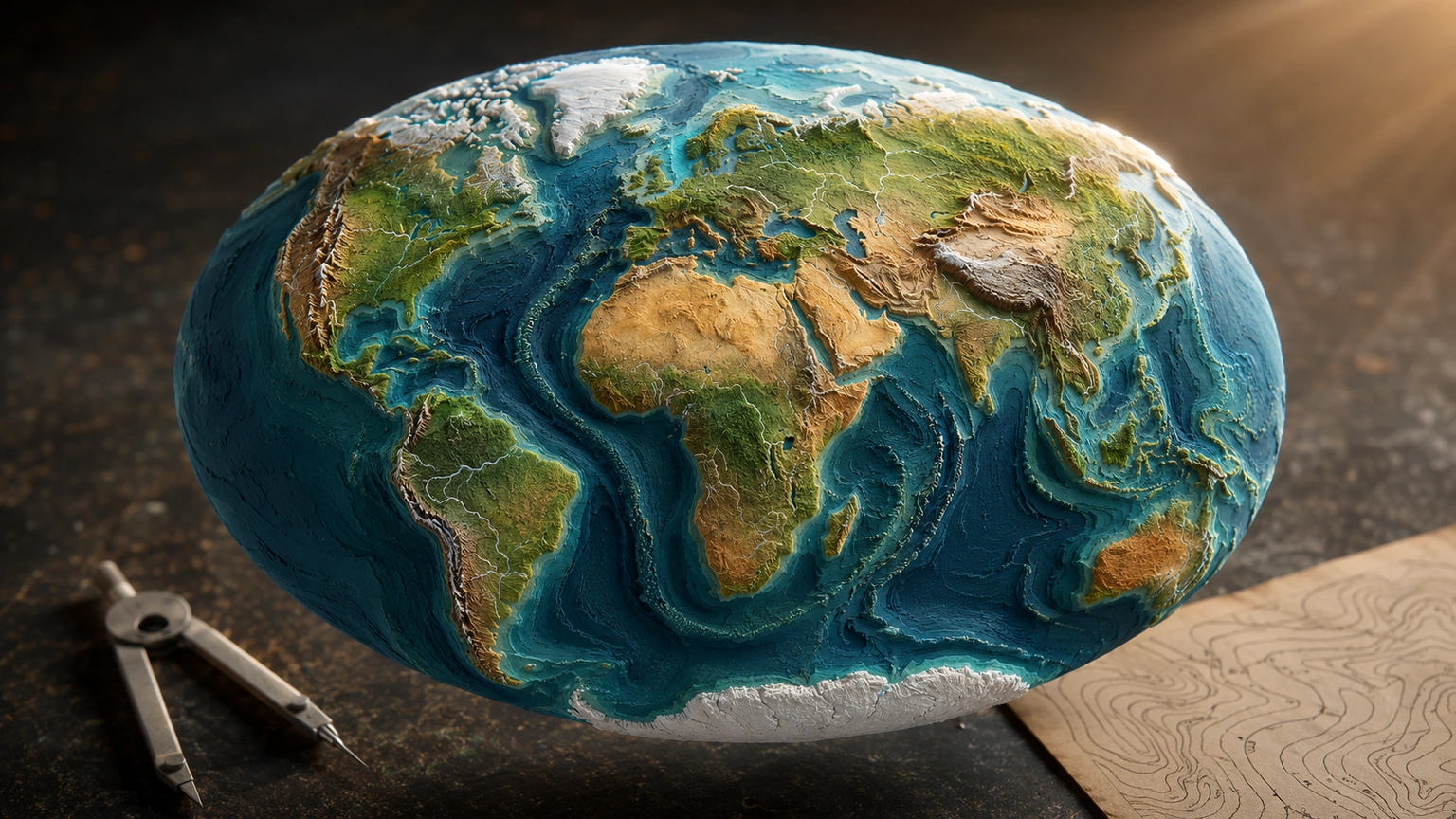
A weathered world map surrounded by artefacts evoking ancient empires, exploration, and world history
General Knowledge & Science · Easy
TestYourChoice original artwork

About this quiz

School history often reduces to memorising dates, which is a shame, because the interesting part is the chain of cause and effect. This quiz leans toward that second kind of knowledge. It asks who built the pyramids at Giza and which empire Augustus founded, but the explanations focus on why it mattered: how movable type around 1440 made books cheap enough to spread ideas that reshaped Europe, why the Renaissance began in Italian trading cities flush with money and rediscovered classical texts, and what the French Revolution of 1789 actually overturned.

The ten questions sweep from ancient Egypt and Rome through the Great Wall's real purpose and the age of exploration, into the revolutions that made the modern world. Only one question truly hangs on a date, and it is one worth knowing.

If your history is rusty, expect a middle score and treat the explanations as the real content — each is a compressed story rather than a flashcard. The companion article on world history basics tells the whole arc in order, and pairs well with a second attempt at the quiz a few days later.

Quick info

Before you start

Best for

Curious learners of all ages

Format

10 explanation-backed questions in about 11 minutes.

What you'll cover

A small map of the test

  1. 1Ancient civilisations and empires
  2. 2World-changing inventions and ideas
  3. 3Major revolutions and turning points
  4. 4Famous explorers and historical firsts
Audience

Who this quiz is for

  • Curious learners of all ages
  • Students and trivia lovers brushing up on world history basics
Key concepts

Ideas this quiz checks

Civilisation

A complex society with cities, shared culture, and organised government, such as Ancient Egypt or Rome.

Empire

A group of states or peoples ruled over by a single supreme authority, such as an emperor.

Revolution

A sudden, far-reaching change in political power or social order, often overturning an existing government.

Renaissance

A period of renewed interest in art, science, and classical learning that began in 14th-century Italy.

Score guide

How to read your score

  1. 80–100% Strong command

    You understand most of the core ideas and can use the explanations to polish smaller gaps.

  2. 50–79% Solid base

    You know part of the topic, but the missed explanations are the highest-value review material.

  3. 0–49% Review first

    Treat this as a starting map: revisit the key concepts, then retake the quiz for a cleaner signal.

After the quiz

Recommended next steps

  • Take the Geography Basics Quiz for another quick knowledge check
  • Try the Human Body Basics Quiz to test a different subject
  • Explore the General Knowledge & Science category for more to learn
References

Sources and further reading

How to play

Instructions

  1. You have 11 minutes total to answer 10 multiple-choice questions.
  2. Choose an answer to lock it in. The runner immediately shows the correct answer and explanation.
  3. Use Hint when you want a nudge, or Skip to move forward without answering.
  4. Keyboard shortcuts: A-D answer, H hints, S skips, Enter/ next, and previous.
  5. No signup required. Your progress is local to this quiz session.
Every question, explained

Answer key and explanations

All 10 questions from this quiz, with the correct answer and the reasoning behind it. Take the quiz first if you want an honest score — or read straight through and use this as revision material.

  1. Which ancient civilisation built the Great Pyramids at Giza?

    • Ancient Greece
    • Ancient EgyptCorrect
    • Mesopotamia
    • The Roman Empire

    Why: The Great Pyramids at Giza were built by Ancient Egypt around 4,500 years ago, during the Old Kingdom, as monumental tombs for pharaohs such as Khufu. They are the only surviving structures of the Seven Wonders of the Ancient World. Mesopotamia, in modern Iraq, built ziggurats rather than pyramids.

  2. Who is credited with introducing the printing press with movable type to Europe around 1440?

    • Leonardo da Vinci
    • Galileo Galilei
    • Johannes GutenbergCorrect
    • Isaac Newton

    Why: Johannes Gutenberg, a German goldsmith, introduced the movable-type printing press to Europe around 1440. It made books far cheaper to produce and helped spread literacy, ideas, and the Reformation across the continent. (Movable type had been invented earlier in China, but Gutenberg's press transformed Europe.)

  3. Augustus was the first emperor of which ancient empire?

    • The Persian Empire
    • The Roman EmpireCorrect
    • The Greek Empire
    • The Egyptian Empire

    Why: Augustus became the first Roman emperor in 27 BCE, ending the Roman Republic and beginning nearly 1,500 years of imperial rule (counting the later Eastern/Byzantine continuation). At its height the Roman Empire encircled the entire Mediterranean Sea. Augustus was the adopted heir of Julius Caesar.

  4. In which country did the Renaissance begin?

    • France
    • England
    • ItalyCorrect
    • Germany

    Why: The Renaissance began in Italy in the 14th century, in wealthy city-states such as Florence and Venice, before spreading across Europe. It was a period of renewed interest in classical Greek and Roman art, science, and learning, and produced figures like Leonardo da Vinci and Michelangelo.

  5. Which revolution began in 1789 and overthrew the monarchy in France?

    • The American Revolution
    • The French RevolutionCorrect
    • The Industrial Revolution
    • The Russian Revolution

    Why: The French Revolution began in 1789 with events such as the storming of the Bastille, and it overthrew the monarchy of King Louis XVI, who was later executed. Its ideals of liberty, equality, and fraternity reshaped politics across Europe. The Russian Revolution, by contrast, came much later, in 1917.

  6. The Great Wall was built over many centuries primarily to protect which civilisation?

    • Japan
    • India
    • ChinaCorrect
    • Mongolia

    Why: The Great Wall of China was built and rebuilt over roughly 2,000 years by successive Chinese dynasties to defend against invasions from the north, including by nomadic groups such as the Mongols. The best-preserved sections visible today were largely built during the Ming dynasty (1368–1644).

  7. Who was the first President of the United States?

    • Thomas Jefferson
    • Benjamin Franklin
    • George WashingtonCorrect
    • Abraham Lincoln

    Why: George Washington served as the first President of the United States from 1789 to 1797, having previously led the Continental Army during the American Revolutionary War. He set many precedents, including the two-term tradition later written into law. Abraham Lincoln, often confused as an early president, was the 16th.

  8. In which year did World War II end?

    • 1918
    • 1939
    • 1945Correct
    • 1950

    Why: World War II ended in 1945, with Germany surrendering in May and Japan surrendering in September after the atomic bombings of Hiroshima and Nagasaki. The year 1918 marks the end of World War I, while 1939 marks the start of World War II when Germany invaded Poland.

  9. Which explorer's 1492 voyage, funded by Spain, reached the Americas?

    • Ferdinand Magellan
    • Christopher ColumbusCorrect
    • Vasco da Gama
    • Marco Polo

    Why: Christopher Columbus reached the Americas in 1492 on a voyage funded by the Spanish crown, while searching for a western sea route to Asia. His voyages opened sustained contact between Europe and the Americas. Ferdinand Magellan's expedition later completed the first circumnavigation of the globe.

  10. In which country did the Industrial Revolution begin in the late 18th century?

    • The United States
    • Germany
    • France
    • Great BritainCorrect

    Why: The Industrial Revolution began in Great Britain in the late 18th century, driven by innovations such as the steam engine and mechanised textile production. It transformed societies from farming and handcraft toward factories and mass production, before spreading to the rest of Europe and North America.